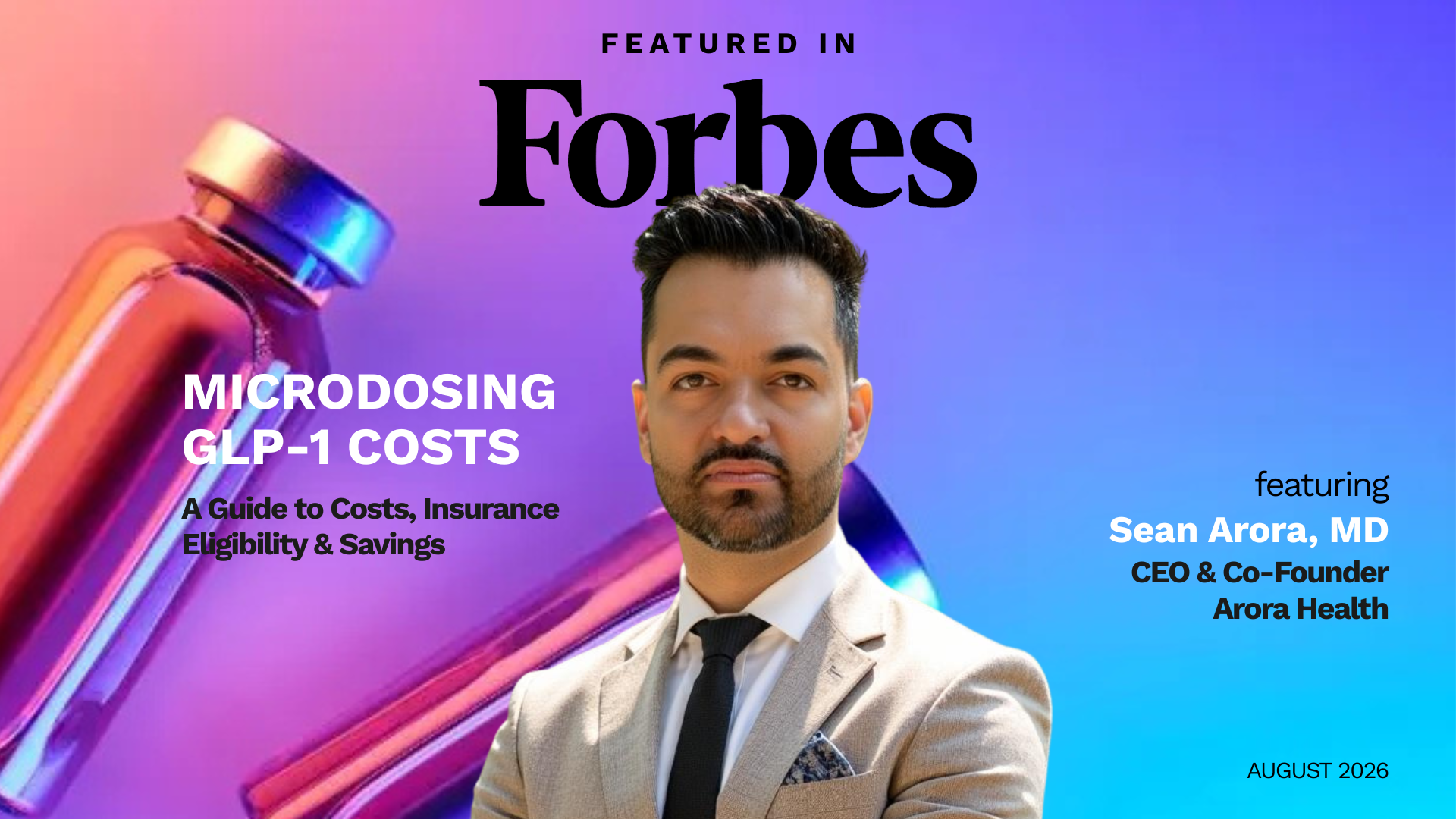
Forbes Health: The Cost and Considerations of GLP-1 Microdosing
Forbes Health recently featured insights from Sean Arora, MD, CEO and Co-Founder of Arora Health, on the costs, insurance limitations, and clinical considerations surrounding GLP-1 microdosing.
As interest in personalized weight management grows, patients are exploring lower-dose GLP-1 treatment options, often with affordability and long-term access in mind. In the article, "Microdosing GLP-1 Costs: A Guide to Costs, Insurance Eligibility & Savings," Dr. Arora joins other medical experts in examining the financial realities of GLP-1 microdosing, the limitations of insurance coverage, and the importance of appropriate medical supervision.
Article highlights
The Forbes Health feature explores several key themes, including:
- Understanding the cost of GLP-1 treatment. Brand-name medications can represent a significant monthly expense, particularly for patients paying out of pocket. Pricing varies by medication, provider, pharmacy, and available savings programs.
- Recognizing the limitations of insurance coverage. Insurance plans generally base coverage on FDA-approved medications, indications, and dosing schedules. Microdosing falls outside established dosing guidelines, creating additional challenges for reimbursement.
- Exploring the potential of personalized dosing. Lower-dose approaches have generated interest as patients and providers explore treatment tolerability, affordability, and long-term maintenance. However, more clinical research is needed to establish their safety and effectiveness.
- Prioritizing transparency in pricing and care. Patients should understand medication costs, provider fees, and what clinical support is included before beginning treatment.
- Understanding the risks of compounded medications. While compounded GLP-1s may be marketed as lower-cost alternatives, they are not FDA-approved and can introduce additional safety, quality, and dosing concerns.
- Keeping clinical oversight at the center. GLP-1 treatment decisions should involve qualified medical professionals, appropriate prescribing practices, and licensed pharmacies rather than unverified online sources.
The affordability conversation
Dr. Arora highlights an important question surrounding the long-term accessibility of GLP-1 treatment:
“The irony is that microdosing may ultimately be part of the answer to the affordability problem, because maintenance at fractional doses is exactly the cost structure that could make long-term coverage sustainable at population scale.”
While lower-dose approaches may offer potential financial advantages, additional clinical evidence and standardized dosing protocols are needed before they can become an established treatment strategy.
As demand for GLP-1 medications grows, affordability and access remain important considerations. Balancing these priorities with evidence-based prescribing, transparent pricing, and patient safety will be essential to responsible weight management care.
Read "Microdosing GLP-1 Costs: A Guide to Costs, Insurance Eligibility & Savings" in Forbes Health.

Build what's next on a stronger clinical foundation.
Whether you're launching a new clinical program, expanding a clinic, entering new markets, or scaling a digital health platform, Arora helps you build the physician-led clinical and compliance infrastructure to do it responsibly.